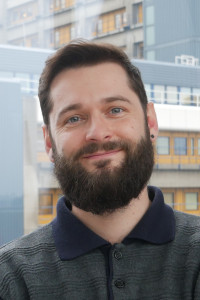
dr. Dennis Hoving
Research
My scientific interests include studying how cellular responses after immunization are shaped and preserved, and understanding why these differ in magnitude, quality, and durability across host contexts and vaccine antigens. To address these questions, we use comprehensive cellular immune characterization, single-cell antigen-specific B cell profiling and high-dimensional analysis to characterise human immunity and vaccine responses in real-world settings. We have developed a method to quantitate and characterise polysaccharide-antigen specific B cells via flow cytometry and single-cell sequencing, and implemented these in various studies to understand pneumococcal vaccine immunogenicity across host populations with differential ages, immunosuppression status and geographical locations. We also established a high-throughput microfluidic qPCR platform to detect multiple viral and bacterial pathogens that we implemented in a study with daily minimally-invasive sampling in young children to resolve nasal microbial dynamics, local immunity and associations with onset of symptoms.
Curriculum Vitae
I performed my PhD at the Francis Crick Institute (UK), where I characterised neutrophils and immune dysregulation in sepsis and COVID-19. We discovered that microbial capture by macrophages in the spleen kickstarted inflammatory cytokine production, inactivation of natural nuclease-clearance pathways and leukopenia. Our discovery of cell-free chromatin as key pathology regulator was translated into a nuclease-therapy clinical trial during the COVID-19 pandemic, which showed a reduction in inflammatory pathology. I joined LUMC in 2021 and received a Marie Skłodowska-Curie Actions Postdoctoral Fellowship to characterise pneumococcal vaccine-induced cellular responses.
Groups:
Mucosal and systems immunology