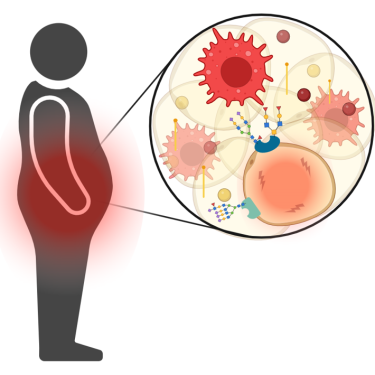
The prevalence of obesity, metabolic dysfunction-associated steatotic liver diseases (MASLD) and type 2 diabetes is rising in both Western societies and developing countries. In this context, dysfunctions of the immune system play a central role, with chronic low-grade inflammation (“metaflammation”) contributing to development of insulin resistance and impaired metabolic homeostasis. By contrast, infection with parasitic helminths, which are modulating the host immune response through a wide variety of mechanisms, have been shown to dampen metaflammation, highlighting the dual relationship between communicable and non-communicable diseases.
Our group mainly focuses on studying the molecular mechanisms underlying the immune-mediated regulation of metabolic homeostasis in the context of obesity, MASLD/MASH, type 2 diabetes and (helminth) infection. Our research aims to identify (parasite-derived) molecules and/or new molecular targets involved in tissue-specific regulation of insulin sensitivity and glucose/lipid metabolism that can lead to future therapeutic opportunities for the treatment of metabolic disorders and hyperinflammatory diseases.